
Ten times a juror. What I learned about great design.
“Design should not dominate people. It should help people. That’s its role.”
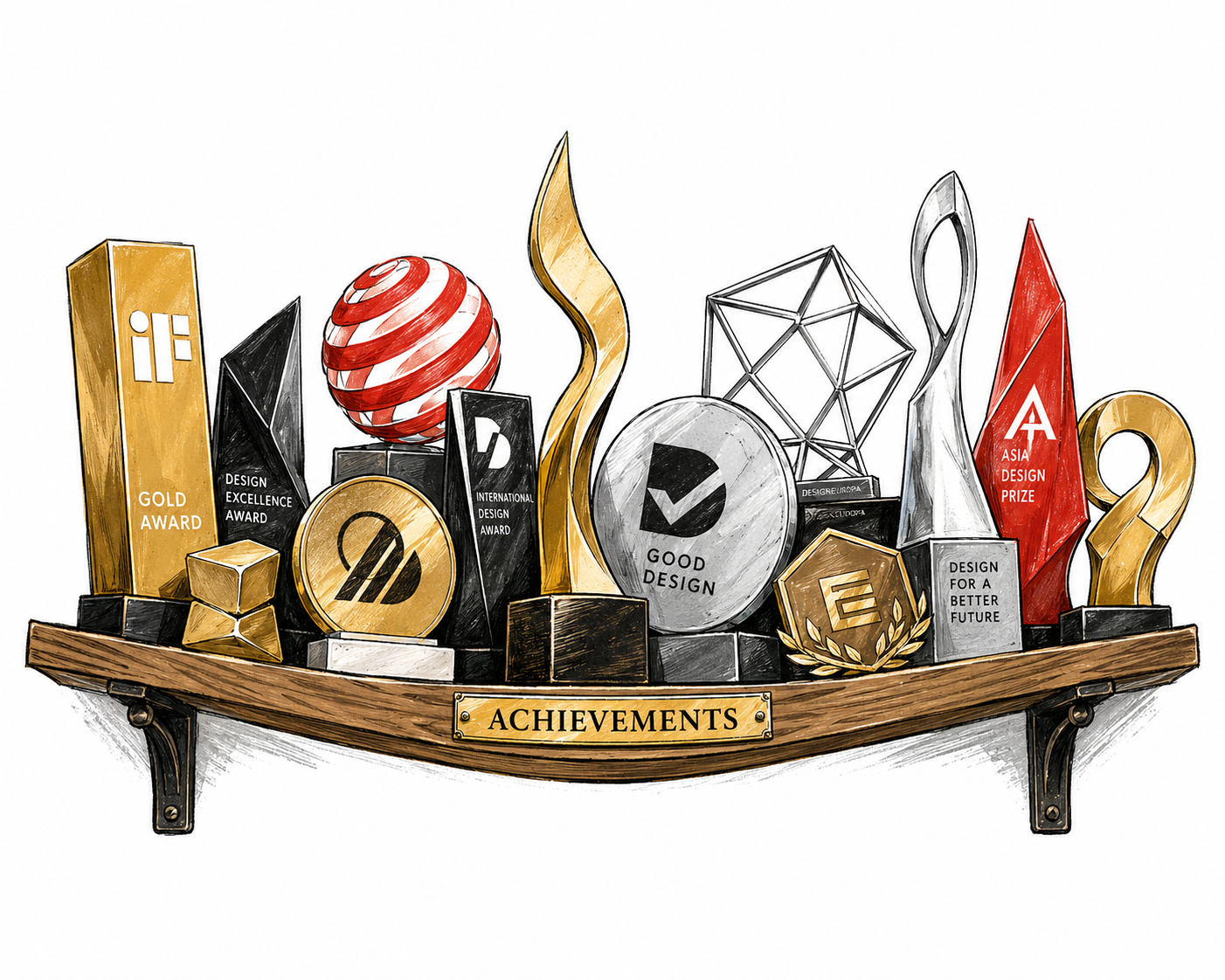
When I received my first invitation to the iF Design Award jury in 2019, I treated it as a one-off episode. A pleasant one, sure, but singular. I had no idea that over the next six years I would be invited nine more times to judge at the most prestigious design competitions in the world. iF Design Award. ADC Annual Awards at its hundredth, jubilee edition. DesignEuropa Awards EUIPO three years running. Taiwan International Student Design Competition. Dobry Wzór twice. And since January 2026, the Advisory Board of the Central European Creative Awards.
Each invitation came from a different part of the world, a different institution, a different question about my perspective. But they all had one thing in common. They were a decision by the organizer that my work and my judgement were worth including in the group that determines what gets the seal of quality in international design that year.
Six years later I know something I did not know at the start. Being on the other side of the jury table is not a reward for a career. It is one of the most powerful tools for professional development available to a designer who has already reached a certain level. Every session changes how you look at your own work. After ten sessions you have something that is hard to describe briefly. A calibration of the eye that cannot be acquired any other way.
This is what you actually take away from those six years.
iF Design Award. Hannover, 2020. The first session that changed everything.
iF is one of the three largest design competitions in the world. Running in Germany since 1953, it accepts submissions from fifty countries across seventy product categories. Thousands of products every year. The iF stamp on a product means something in every design shop from Tokyo to Copenhagen.
My first session, in February 2020, was in-person.. The werhouse converted for the competition. And what I saw there is an experience you do not forget. Imagine six thousand products gathered under one roof. Televisions, refrigerators, cars, medical equipment, professional devices, furniture, lighting, toys, accessories, everything from the smallest electronic gadgets to industrial machines the size of a room. Every product is physically there. You can walk up, touch it, pick it up, see it in scale, check how it works. That alone is an experience for any designer. Three days walking through a hall containing the best things the design world produced that year — like a children's candy store stocked only with the finest.
But the hall is not the most striking thing. What strikes you is what you discover in the jury room.
A hundred jurors. All active practitioners. Heads of Design at major global corporations. Directors of the world's best design studios. Chief Design Officers at automotive groups. Renowned professors from the leading design schools whose books you had read breathlessly. Independent designers whose names you knew from trade magazines. And somewhere among them, me.
On the first day, when each juror briefly introduces themselves to the whole group, you start to understand where you have landed. You are assigned to a small team — mine included the Head of Design at Sony, a Fuji Films counterpart, a well-known professor, and the owner of one of the best design studios in Germany. For the next three days I would be sitting and discussing products with people whose work I had known as an admirer and a repeat user for years.
When I introduced myself on that first day and said I was from Poland and had won the iF Gold Award in 2014 for the DICE+ project, the room went quiet, and then there was an applause I did not expect and did not yet understand. Back then, the iF Gold was just another award I had won six years earlier and rarely thought about. I always knew it was prestigious. I did not fully understand how much.
The room's reaction opened my eyes for the first time. These people, the best designers in the world, many of them still dreaming about that award because they do not have it yet. They looked at me with a mixture of respect and a touch of envy, and I sat there a little stunned, trying to understand what that award actually means in the industry. It also showed how many of them had been jurors before — because only by being on the inside can you understand what I did not yet know then.
Over the next three days, as we worked through the process of deliberating and awarding iF Gold, everything became clear. iF Gold is not an award for a "nice product." It is the highest evaluation that the entire jury must accept. One objection can cost you the gold. The mechanism is built so that the award passes only when nobody in the room has significant doubts. It is not a majority decision. It is a decision by consensus and genuine recognition from the industry.
Standing on that stage in 2014, alongside Apple, Sony, HP and the other global names receiving iF Gold — that was not coincidence or a lucky break in one edition. It was something the entire expert body considered worthy of the highest recognition. I understood that only in 2020, sitting on the other side, watching how rarely that decision is made and how exceptional a product has to be to earn it.
iF online. The 2021 edition and a lesson I would rather have avoided.
The second iF invitation, for 2021, arrived in the middle of a pandemic. Traditional sessions were impossible. iF built digital tools and moved the entire process online. I will say it plainly — this was unfair to those submitting. It is not about the quality of the tools. iF handled it technically as well as could be managed. The problem is that evaluating a product you cannot touch is fundamentally different from evaluating one you have in front of you.
When you approach a physical product, you sense things within seconds that no description conveys. How the finish responds to light. How a hinge feels under your finger. How the weight of the product matches its apparent delicacy or solidity. How a screen's resolution looks live versus on a render. How keyboard sound helps or hinders use. These are design decisions you evaluate literally through your senses. Online, much of that is gone.
In the digital 2021 session, all we had were photographs, descriptions and short videos. Every chance to touch a product became gold. Every photograph that conveyed materiality was worth ten times more than a purely promotional shot. This created a strange asymmetry — products that would previously have been evaluated in reality were in 2021 judged entirely through the lens of how their creators had photographed them. And that was not only an iF problem but a feature of all pandemic-era editions. This process also opened the door to all the pre-selection rounds that now happen in this form permanently.
Looking back, that situation taught me one of the most practical lessons of my career. I return to it every time I prepare product materials for clients. The first photograph must explain the product without words. Because nobody has time to read your description. Hundreds of products, limited time, tired jurors. The first impression decides whether a product gets a chance at serious discussion at all, or even triggers the desire to dig deeper when the submission has not made it easy enough.
This mechanism, incidentally, is why organizers of international competitions select only active, experienced practitioners for juries. Not critics. Working designers who are themselves making products for the market at the same time. Because only someone who designs every day can assess in a few seconds how significant a design challenge lay behind that particular product. Whether it was something difficult or easy. Whether the team handled it brilliantly or with difficulty and in poor style. Those subtle assessments are impossible for anyone outside the field.
The second reason for selecting a large number of jurors also concerns fairness. Even among experienced designers from the same industry, there are completely divergent evaluations of the same product. One sees genius, another sees mediocrity. Only a large enough group allows you to draw a reasonable average that does not disadvantage anyone and does not disproportionately reward products that simply happened to appeal to one particular juror.
ADC Annual Awards. The hundredth edition of a competition older than any living designer.
In 2021 I received an invitation to jury the ADC Annual Awards at its jubilee, hundredth edition. A competition founded in New York in 1921, when modern advertising, branding and industrial design as we know them today did not yet exist. A hundred years later it still runs and still sets the standard for the entire American creative industry.
ADC differs from iF or DesignEuropa in scope. It brings together advertising, branding, packaging, illustration, motion design and product design. This is not a narrow design competition. It is a competition for creativity in the broadest sense, where the world of design and the world of advertising agencies meet in one place — two cultures that normally work alongside each other but rarely talk. A competition that across its hundred-year history honored Andy Warhol, Saul Bass, Charles and Ray Eames, Paul Rand and Annie Leibovitz. The hundredth edition carried a particular weight.
So you can imagine that receiving an invitation to the jubilee edition was something more than a regular jury role. The room — virtually again, the pandemic continued — was made up of people whose work anyone who encounters media will recognize. Advertising that entered popular culture and is still referenced today. Brands we use every day. You look at the list of names and think: these people changed the way the world communicates. The way I communicate.
From this session I took away something that today directly influences how I advise clients on projects combining product design with brand building. A designer looks at a product and sees form, materials, ergonomics. An advertising person looks at the same product and sees a promise, a narrative, an emotion. A brand strategist sees consistency and positioning. Each perspective is valid and each is incomplete. The best products win because they work on all these levels simultaneously. It is not a matter of luck. It is a matter of complementarity — someone consciously designed all those layers to give a coherent picture.
When today I talk with a startup founder who has come to me asking for "just product design," I often return to this experience. Because I know that a project meant to work internationally needs more than good form. It needs to tell a story that makes sense regardless of who is looking and from which part of the world.
DesignEuropa Awards EUIPO. Three years that changed my understanding of intellectual property.
DesignEuropa Awards, organized by the European Union Intellectual Property Office, is only ten editions old, yet it has had no trouble establishing itself among the most prestigious European design competitions. In 2021 I was a finalist for the electronic stethoscope StethoMe. Two years later, in 2023, I received a jury invitation. It repeated in 2024 and 2025. Three consecutive editions on the judging panel, each one shifting the perspective on competitions even further.
The experience of landing on both sides of yet another competition remains unique. I know exactly what a company feels when its product is invited to the final — that mixture of pride, uncertainty, anxiety about whether you performed well enough against the rest. I also know how jurors discuss the same product behind closed doors, what questions arise, which arguments persuade and which fall flat — because more than once my position turned out to be the deciding one. This sharpens the sense of responsibility enormously and builds a strong drive to fulfil the evaluation task as rigorously as possible.
The judging criteria at EUIPO are largely similar to those at iF and other serious competitions. Aesthetics, usability, innovation, quality of execution. But at EUIPO there is something not found anywhere else to the same degree — evaluation of intellectual property management. Is the design properly registered as a Registered Community Design. Does the company use IP rights consistently. Is the product on the market consistent with what was registered. This makes EUIPO not just a design competition but, in a sense, a strategic one — it rewards companies that understand design as an economic asset and manage it consciously. And after so many sessions and visits to EUIPO, something has sunk in about my own work: at the end of the day, what I do is sell my intellectual property.
The most important thing these three years taught me concerns precisely the relationship between design and IP. Most designers I work with treat intellectual property as something a lawyer handles after the project is finished. That approach costs companies a great deal of money. The best European firms think about IP during the design process. Which part of the product is distinctive enough to protect. How design registration affects competitive strategy. How to build a portfolio of rights that creates real advantage.
The second thing that gained weight through these three years at EUIPO is sustainability. Sustainability in this competition is not a slogan. It is a hard criterion evaluated through concrete questions about materials, product lifecycle, circularity and ecodesign regulations. Companies with vague answers to those questions are eliminated early. Companies that can show specific data and specific decisions gain a real edge.
This is a criterion I now bring to every project where it applies. Advisory work at the intersection of design, IP strategy and sustainability has become one of the stronger elements of what I offer clients through All Form One. Because it is important that products solve real problems rather than becoming, after a few months, another item to be disposed of.
Taiwan International Student Design Competition. Twenty thousand entries that changed my optimism.
In 2024 I received an invitation to jury TISDC — the world's largest student design competition. That edition received nearly twenty thousand entries from eleven hundred schools in sixty-four countries. A scale impossible to imagine until you sit in front of those lists.
It is a considerable collision with a reality quite different from the one I remember at their age. Not only technically — that is obvious, the tools have changed, the world has turned inside out. The difference is in the way of thinking. Social responsibility in design, which we discuss at conferences, is rarely a natural default for them. Many of these projects are not trying to fix the world, and I had expected and hoped for more of that. Youth has this particular quality of positive naivety that lets us solve problems precisely because we do not yet know they are impossible to solve. That should motivate young designers to engage with serious subjects rather than submitting another phone case with a kitten for competition evaluation. Fortunately there were a few exceptionally aware individuals who were introducing innovations in their own surroundings that bordered on revolution — similar to the kind described in the film "The Boy Who Harnessed the Wind," which tells the true story of fourteen-year-old William Kamkwamba. I recommend it to anyone who has not seen it.
It was because of those few that I emerged from that session more optimistic than I had entered. That is not a trivial statement. I have worked in this industry long enough to remember how narrow our priorities were twenty-odd years ago. We made attractive things, sometimes functional, rarely thinking about their consequences beyond aesthetics and ergonomics. Those few exceptional students whose work I evaluated in 2024 think more broadly, more long-term and more deeply than 99 percent of people their age.
Dobry Wzór. Returning after two decades from the other side of the table.
Dobry Wzór is Poland's oldest design competition. Organized by the Institute of Industrial Design for over seventy years. For a Polish designer it is what the Architecture of the Year award is to an architect. A point of reference you cannot sidestep.
I was a proud laureate several times. Returning in 2024 as a juror, and again in 2025, closed a certain cycle. From a designer whose work was recognized, I became one of those who make decisions about others' work.
This perspective is valuable for a different reason than it might seem. It is not about satisfaction, though that is there. It is about seeing directly how the Polish design market changes year by year. When I was winning in 2010, Polish design was still learning to stand on its own feet after decades of interruption. A few years before that, we were opening one of the first design offices in Poland, though in the first years ninety percent of commissions came from abroad. Products were often derivative, because age and lack of experience did not allow for more. A confident voice comes simply with time and that must always be taken into account when evaluating both oneself and others.
In 2024, when I was judging, I saw something different. Polish companies are today submitting products that are not an attempt to be "European." They simply are European, in the sense that they hold a standard that twenty years ago was international-level. Polish design is finding its own voice, and products winning Dobry Wzór are simultaneously winning iF Gold Awards.
From the perspective of my business work, this is information that changes conversations with clients. Polish companies are today ready for the international level. This is not an aspiration. It is a reality whose evolution I am not only witnessing but actively contributing to.
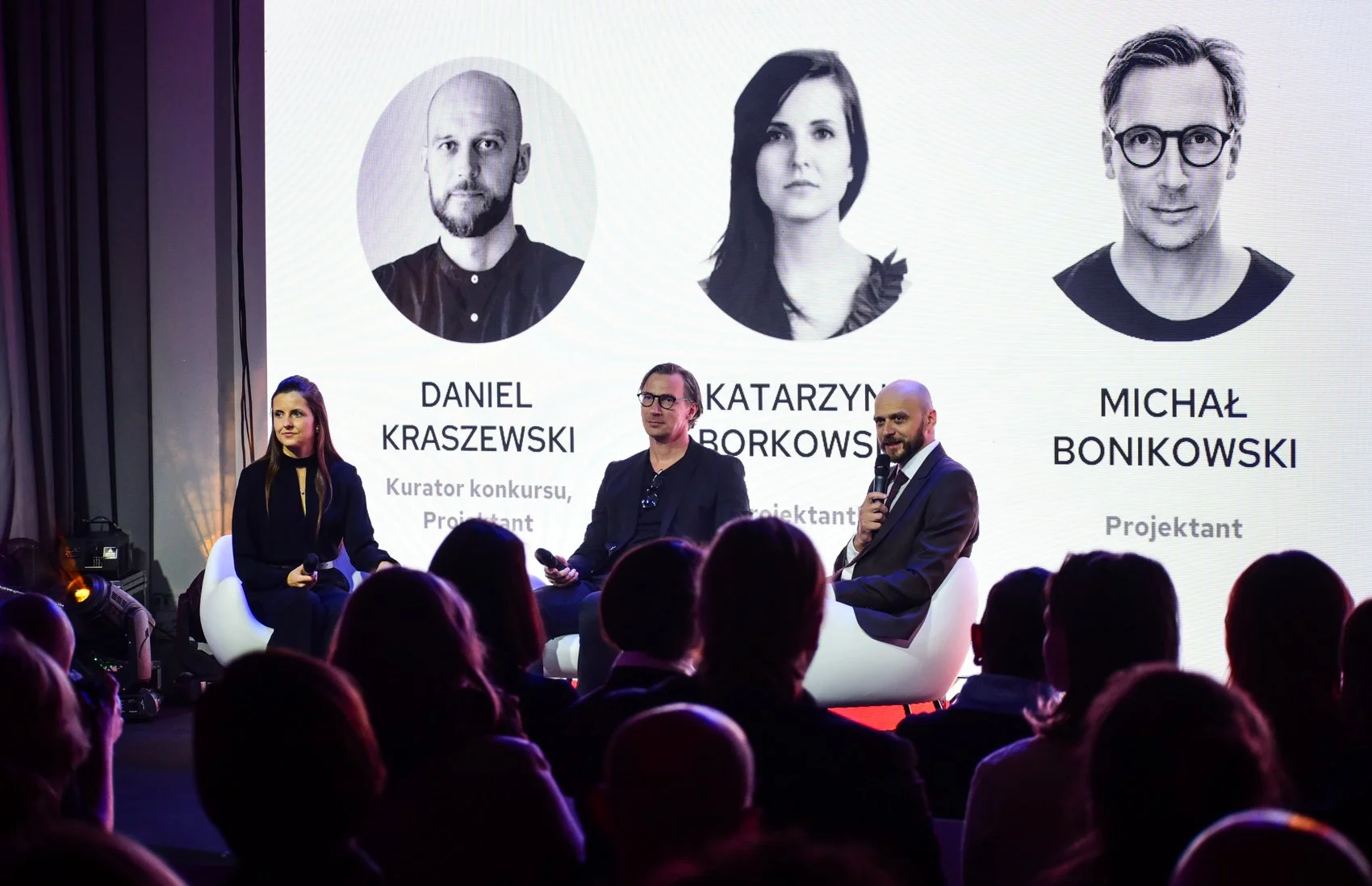
Panel discussion before the Dobry Wzór 2024 awards ceremony. Michał Bonikowski as a juror and panelist alongside Daniel Kraszewski and Katarzyna Borkowska.
Central European Creative Awards Advisory Board. The newest role, which works differently.
Since January 2026 I have been sitting on the Advisory Board of the Central European Creative Awards — an initiative whose purpose is building a regional platform for design and creativity in Central Europe. This role differs from all previous ones in one key respect. Here you do not evaluate individual projects. Here you build the context in which those projects can exist.
Central Europe is undervalued in global design, partly because even as a place on the map it is only recently asserting itself. Somewhere between western Europe and eastern Europe lies a mass of other Europe that is finally beginning to demand attention loudly. We have excellent designers and interesting companies from Poland, the Czech Republic, Slovakia, Hungary, the Baltic states. We have our own cultural perspective shaped by our history and by how the market developed here after 1989. What we are missing is a single global platform that shows that perspective to the world.
CECA is that tool in construction, and after its first edition — which in my assessment was one of the best inaugural editions I have seen — it is heading in exactly the right direction. Work on the Advisory Board also means participating in decisions about which disciplines to promote, what standards to introduce, how to build the region's reputation so that in five years Central European design holds a stronger position than it does today.
This role is a natural extension of everything I have done until now. After years as a juror in international competitions, after founding and running my own brands, after hundreds of projects for Polish and international clients delivered as studio director and as an independent practitioner — involvement in building regional creative infrastructure is what gives me an even better vantage point on the long-term effects of this work.
What ten jury terms give a practitioner. The key conclusions.
After these years spent on both sides of the jury table, I have knowledge that influences every day how I design and how I advise clients, particularly in the context of submitting products to competitions.
First. The evaluation criteria are very similar across all serious international competitions. Aesthetics. Usability. Innovation. Quality of execution. Brand consistency. Sustainability. Social impact. The differences lie in the weighting of individual criteria and how they are measured — at EUIPO IP management quality is added, at iF brand strategy and consistency of execution carry more weight, at TISDC cultural context. But the foundation is the same. If you understand that foundation, you understand what "good product" means in the international sense of the word.
Second. Awards are not given for "nice forms." They are given for effective solutions to real problems. This is a principle visible across all competitions I have participated in. I myself am strongly human-centered in my approach, and what matters enormously to me is that the list of problems to solve is the longest list in the brief. I look at the user, at the usage context, at real consequences. Aesthetics are important, of course, but they are a tool, not a goal.
Third. Optimization and quality of execution are always as important to me as the idea itself. Whether the design team delivered on the brief. Whether the product on the market matches what the renders promised. Whether five parts became three, and ten screws became four. Whether the details are refined. Whether the execution reveals no sign of rushing. These things are visible immediately to anyone with an eye trained by hundreds of their own projects. They cannot be hidden from an experienced juror, and increasingly not from an experienced user.
Fourth. Communication is as important as the product. Jurors do not have time to read a thousand beautiful words in a description. What counts is the first impression and the experienced, competent eye of the juror. The first photograph. The first three sentences of the description. The first thirty seconds of contact with the product. That decides whether the product gets a chance at serious discussion at all. Everything else comes later.
Fifth, and most important. Every jury session is a compression of several months of normal design work. You see hundreds of solutions you would never have invented yourself. You hear experienced people from different cultures and disciplines look at the same products and see different things. Those discussions, their rhythm, the questions that arise — all of it stays in your head and returns when you are at your own work.
After ten sessions I have something that is hard to describe briefly. I know what works internationally. I know why some good projects lose to worse ones. I know what a project with a real shot at an award looks like, and what a project that merely aspires looks like. Above all I know that what separates outstanding products from good ones is not one factor. It is a collection of dozens of subtle decisions, all pointing in the right direction, assembling into a coherent whole that cannot be broken down into simple rules.
This knowledge is part of what my clients get. Not just design. Not just engineering. Not just brand strategy and its big picture. Also the perspective that comes only from having been on both sides of design competitions — that a good product is one whose purpose and meaning need no explanation. It is the lens through which I look at every project I take on today, my own or a client's.
— Boni
Dziesięć razy w jury międzynarodowych konkursów wzorniczych. Czego nowego dowiedziałem się o designie.
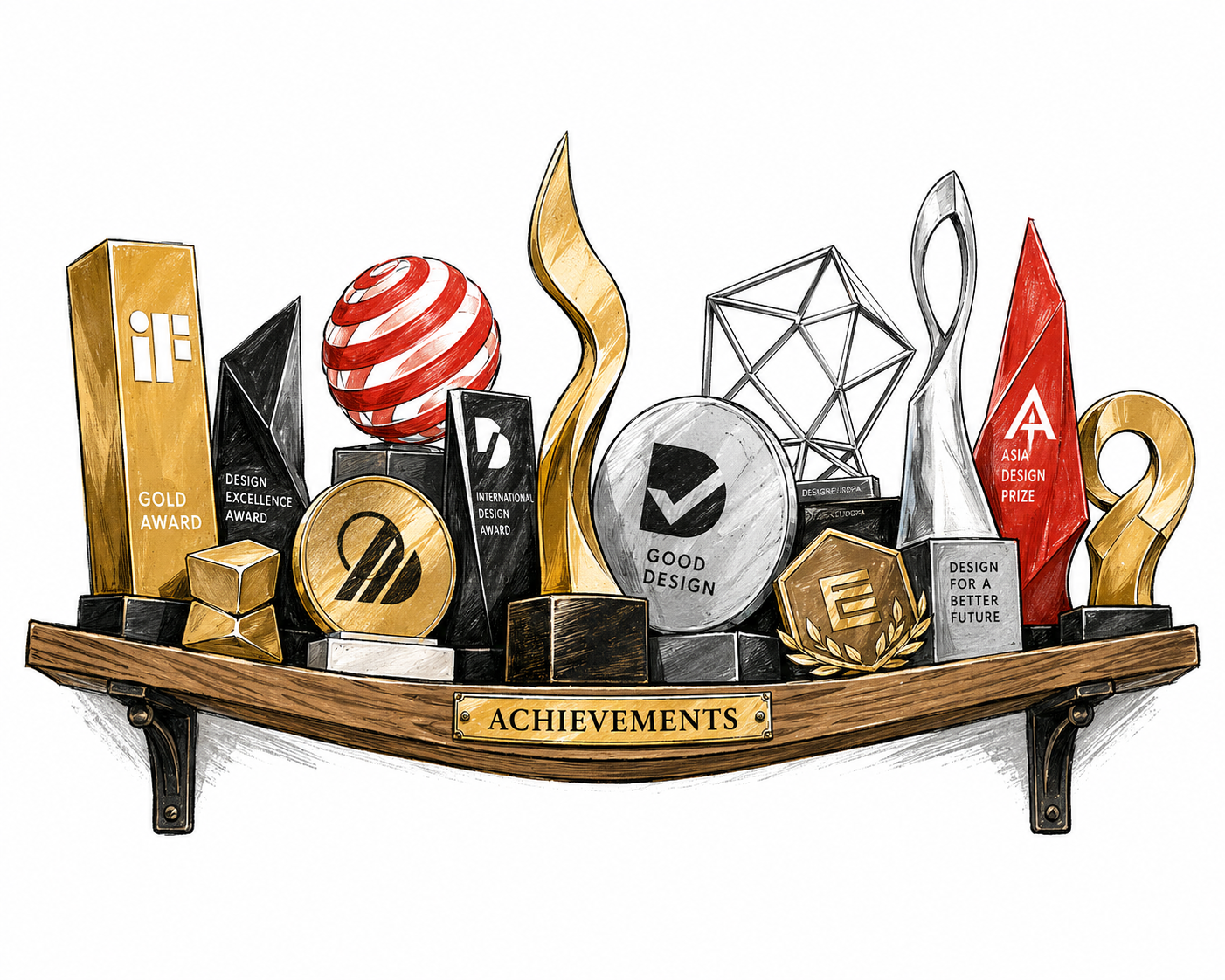
Kiedy w 2019 roku dostałem pierwsze zaproszenie do jury iF Design Award, traktowałem to jak pojedynczy epizod. Miły epizod, owszem, ale jednorazowy. Nie miałem pojęcia, że przez następne sześć lat zostanę zaproszony jeszcze dziewięć razy do oceny w najbardziej prestiżowych konkursach wzorniczych na świecie. iF Design Award. ADC Annual Awards w setnej, jubileuszowej edycji. DesignEuropa Awards EUIPO trzy lata z rzędu. Taiwan International Student Design Competition. Dobry Wzór dwukrotnie. A od stycznia 2026 rada doradcza Central European Creative Awards.
Każde z tych zaproszeń przyszło z innego miejsca świata, z innej instytucji, z innym pytaniem o moją perspektywę. Ale wszystkie miały coś wspólnego. Były decyzją organizatora, że moja praca i moje oceny są warte uwzględnienia w gronie, które decyduje o tym, co w danym roku dostaje stempel jakości w międzynarodowym wzornictwie.
Sześć lat później wiem rzecz, której nie znałem na początku. Bycie po drugiej stronie stołu jurorskiego nie jest nagrodą za karierę. Jest jednym z najpotężniejszych narzędzi rozwoju zawodowego, jakie ma do dyspozycji projektant, który już osiągnął pewien poziom. Każda sesja zmienia to, jak patrzysz na własną pracę. Po dziesięciu sesjach masz coś, co trudno opisać krótko. Kalibrację oka, której nie da się zdobyć w żaden inny sposób.
To jest to, co się naprawdę z tych sześciu lat wynosi.
iF Design Award. Hanower, 2020. Pierwsza sesja, która zmieniła wszystko.
iF jest jednym z trzech największych konkursów wzorniczych na świecie. Organizowany w Niemczech od 1953 roku, przyjmuje zgłoszenia z pięćdziesięciu krajów w siedemdziesięciu kategoriach produktowych. Tysiące produktów rocznie. Stempel iF na produkcie znaczy coś w każdym sklepie projektowym od Tokio do Kopenhagi.
Pierwsza moja sesja, w lutym 2020 roku, była stacjonarna. Hala wystawiennicza przerobiona pod potrzeby konkursu. I to, co tam zobaczyłem, jest doświadczeniem, którego się nie zapomina. Wyobraź sobie sześć tysięcy produktów zgromadzonych pod jednym dachem. Telewizory, lodówki, samochody, sprzęt medyczny, urządzenia profesjonalne, meble, oświetlenie, zabawki, akcesoria, wszystko od najdrobniejszych elektronicznych gadżetów po maszyny przemysłowe wielkości pokoju. Każdy produkt fizycznie tam jest. Możesz podejść, dotknąć, podnieść, zobaczyć w skali, sprawdzić jak działa. To samo w sobie jest przeżyciem dla projektanta. Trzy dni chodzisz po hali, w której zgromadzono najlepsze rzeczy, jakie świat wzornictwa wyprodukował w danym roku, jak dziecięcy sklep z cukierkami zaopatrzony tylko w to co najlepsze.
Ale to nie hala robi największe wrażenie. Robi je to, co odkrywasz na sali obrad.
Setka jurorów. Wszyscy są aktywnymi praktykami. Dyrektorzy ds. designu w wielkich korporacjach. Szefowie najlepszych studiów projektowych na świecie. Chief Design Officerowie w koncernach samochodowych. Znani profesorowie z czołowych uczelni projektowych, których książki czytałeś z zapartym tchem. Niezależni projektanci, których nazwiska znasz z magazynów branżowych. I gdzieś pośród nich ja.
Pierwszego dnia, gdy każdy juror krótko się przedstawia całemu zespołowi, zaczynasz rozumieć, gdzie się znalazłeś. Zostajesz przydzielony do małego zespołu. Mój składał się między innymi z Head of Design Sony, odpowiednika z Fuji Films, znanego profesora i właściciela jednego z najlepszych studiów projektowych w Niemczech. Przez następne trzy dni miałem siedzieć i dyskutować o produktach z ludźmi, których pracę znałem jako wieloletni użytkownik i wielbiciel z magazynów branżowych.
Kiedy przedstawiając się pierwszego dnia powiedziałem, że jestem z Polski i że w 2014 roku zdobyłem iF Gold Award za projekt DICE+, w sali zapadła cisza, a potem nastąpił aplauz, którego się nie spodziewałem i którego wtedy jeszcze nie rozumiałem. Wówczas iF Gold była dla mnie kolejną nagrodą, którą zdobyłem sześć lat wcześniej i o której rzadko myślałem. Zawsze wiedziałem, że jest prestiżowa. Nie rozumiałem do końca, jak bardzo.
Reakcja sali otworzyła mi oczy po raz pierwszy. Ci ludzie, najlepsi projektanci świata, wielu z nich nadal marzących o tej nagrodzie, bo jej jeszcze nie mają. Patrzyli na mnie z mieszaniną szacunku i lekkiej zazdrości, a ja siedziałem trochę zaskoczony, próbując zrozumieć, co ta nagroda naprawdę znaczy w branży. Pokazało mi to też, jak wielu z nich było wcześniej jurorami, bo tylko będąc w środku, można zrozumieć to, czego ja wtedy jeszcze nie wiedziałem.
Przez następne trzy dni, kiedy przeszliśmy przez proces obrad i przyznawania iF Gold, dotarło do mnie wszystko. iF Gold to nie jest nagroda za "ładny produkt". To jest najwyższa ocena, którą musi zaakceptować całe gremium jurorskie. Jeden sprzeciw może pozbawić cię złota. Mechanizm jest skonstruowany tak, że nagroda przechodzi tylko wtedy, gdy nie ma w sali nikogo, kto miałby istotne wątpliwości. To nie jest decyzja większości. To jest decyzja konsensusu i prawdziwe uznanie branży.
Stanie w 2014 roku na tej samej scenie z Apple, Sony, HP i innymi globalnymi markami przy odbieraniu iF Gold nie było przypadkiem ani efektem szczęścia w jednej edycji. To było coś, co całe gremium ekspertów uznało za godne najwyższego uznania. Zrozumiałem to dopiero w 2020 roku, siedząc po drugiej stronie i obserwując, jak rzadko taka decyzja zapada i jak wyjątkowy musi być produkt, żeby ją wygrać.
iF online. Edycja 2021 i lekcja, której bym wolał uniknąć.
Drugie zaproszenie na iF, na rok 2021, trafiło w środek pandemii. Tradycyjne sesje były niemożliwe. iF zbudowało narzędzia cyfrowe i przeniosło cały proces online. Powiem to wprost: to było krzywdzące dla zgłaszających. Nie chodzi o jakość narzędzi. iF zarządziło to technicznie tak dobrze, jak się dało. Chodzi o to, że ocenianie produktu, którego nie możesz dotknąć, jest zasadniczo czymś innym niż ocenianie produktu, który masz przed sobą.
Kiedy podchodzisz do produktu fizycznego, czujesz w ciągu kilku sekund rzeczy, których żaden opis nie odda. Jak wykończenie reaguje na światło. Jak zawias działa pod twoim palcem. Jak ciężar produktu pasuje do jego pozornej delikatności albo masywności. Jak rozdzielczość ekranu wygląda na żywo, a nie na renderze. Jak dźwięk klawiatury pomaga lub przeszkadza w użytkowaniu. To są decyzje projektowe, które oceniasz dosłownie zmysłami. Online wiele z tego tracisz.
W cyfrowej sesji 2021 zostały nam tylko zdjęcia, opisy i krótkie filmy. Każda możliwość dotknięcia produktu stała się złotem. Każde zdjęcie, które oddawało materialność, ważyło dziesięć razy więcej niż zdjęcie czysto reklamowe. To dało dziwną asymetrię: produkty, które wcześniej byłyby ocenione w rzeczywistości, w 2021 zostały ocenione przez pryzmat tego, jak ich twórcy je sfotografowali. I nie był to tylko problem iF, ale wszystkich covidowych edycji. Ten proces otworzył też drogę dla wszystkich pre-selekcji, które do dziś odbywają się w tej formie na stałe.
Z perspektywy czasu okazało się, że ta sytuacja nauczyła mnie jednej z najbardziej praktycznych lekcji w mojej karierze. Wracam do niej dziś za każdym razem, kiedy przygotowuję materiały produktowe dla swoich klientów. Pierwsza fotografia musi tłumaczyć produkt bez słów. Bo nikt nie ma czasu, żeby przeczytać twój opis. Setki produktów, ograniczony czas, zmęczeni jurorzy. Pierwsze wrażenie decyduje, czy produkt w ogóle dostanie szansę na poważną dyskusję, czy wywoła chęć dalszego zagłębiania się w temat.
Ten mechanizm jest zresztą powodem, dla którego organizatorzy międzynarodowych konkursów dobierają do jury tylko aktywnych, doświadczonych praktyków. Nie krytyków. Czynnych projektantów, którzy w tym samym czasie sami robią produkty na rynek. Bo tylko ktoś, kto codziennie projektuje, jest w stanie w kilka sekund ocenić, jak duże wyzwanie projektowe stało za tym konkretnym produktem. Czy to było coś trudnego, czy łatwego. Czy zespół poradził sobie wybitnie, czy z trudem i w złym stylu. Te subtelne oceny są niemożliwe dla osoby spoza branży.
Drugi powód dobierania dużej liczby jurorów dotyczy uczciwości. Nawet wśród doświadczonych projektantów z tej samej branży zdarzają się totalnie rozbieżne oceny tego samego produktu. Jeden widzi geniusz, drugi widzi przeciętność. Tylko odpowiednio liczne grono pozwala wyciągnąć rozsądną średnią, która nie krzywdzi nikogo i nie wynagradza nieproporcjonalnie produktów, które trafiły akurat na sympatię jednego jurora.
ADC Annual Awards. Setna edycja konkursu starszego niż najstarszy żyjący projektant.
W 2021 roku dostałem zaproszenie do jury ADC Annual Awards w jubileuszowej, setnej edycji. Konkurs założony w Nowym Jorku w 1921 roku, kiedy nie istniała jeszcze nowoczesna reklama, branding ani dyscyplina industrial design w tym kształcie, w jakim ją dziś znamy. Sto lat później on nadal działa i nadal jest punktem odniesienia dla całej amerykańskiej branży kreatywnej.
ADC różni się od iF czy DesignEuropa zakresem. Łączy reklamę, branding, packaging, illustration, motion design i product design. To nie jest konkurs wąsko wzorniczy. To jest konkurs szeroko pojętej kreatywności, w którym w jednym miejscu spotyka się świat designu i świat agencji reklamowych, dwie kultury, które normalnie pracują obok siebie, ale rzadko ze sobą rozmawiają. Konkurs, który w swojej stuletniej historii honorował m.in. Andy'ego Warhola, Saula Bassa, Charlesa i Ray Eames, Paula Randa i Annie Leibovitz. Setna edycja miała szczególny ciężar gatunkowy.
Można sobie wyobrazić, że dostać zaproszenie akurat na setną edycję, na jubileusz, było czymś więcej niż zwykłą rolą jurorską. Sala, tym razem znowu wirtualnie bo pandemia trwała, była złożona z ludzi, których prace zna każdy, kto styka się z mediami. Reklamy, które weszły do popkultury i są cytowane do dziś. Brandy, których używamy codziennie. Patrzysz na listę nazwisk i myślisz: ci ludzie zmienili sposób, w jaki świat się komunikuje. W jaki ja się komunikuję.
Z tej sesji wyniosłem rzecz, która dziś bezpośrednio wpływa na to, jak doradzam klientom przy projektach łączących design produktu z budowaniem marki. Designer patrzy na produkt i widzi formę, materiały, ergonomię. Gość od reklamy patrzy na ten sam produkt i widzi obietnicę, narrację, emocję. Brand strategist widzi spójność i pozycjonowanie. Każda z tych perspektyw jest słuszna i każda jest niekompletna. Najlepsze produkty wygrywają, bo działają na wszystkich tych poziomach jednocześnie. To nie jest kwestia szczęścia. To jest kwestia komplementarności: ktoś świadomie zaprojektował te wszystkie warstwy tak, aby dawały spójny obraz.
Kiedy dziś rozmawiam z założycielem startupu, który przyszedł do mnie z prośbą o "tylko design produktu", często wracam do tego doświadczenia. Bo wiem, że projekt, który ma działać międzynarodowo, musi mieć coś więcej niż dobrą formę. Musi opowiadać historię, która ma sens niezależnie od tego, kto i z jakiej części świata patrzy.
DesignEuropa Awards EUIPO. Trzy lata, które zmieniły moje rozumienie własności intelektualnej.
DesignEuropa Awards organizowane przez Urząd Unii Europejskiej ds. Własności Intelektualnej, choć to tylko dziesiąta edycja, bez problemu znalazły swoje miejsce na liście najbardziej prestiżowych europejskich konkursów wzorniczych. W 2021 roku byłem finalistą za projekt elektronicznego stetoskopu StethoMe. Dwa lata później, w 2023, dostałem zaproszenie do jury. Powtórzyło się to w 2024 i 2025. Trzy kolejne edycje w gronie oceniającym, z których każda jeszcze bardziej zmienia perspektywę postrzegania konkursów.
Doświadczenie znalezienia się po obu stronach kolejnego już konkursu nadal jest unikalne. Wiem dokładnie, co czuje firma, której produkt został zaproszony do finału, tę mieszaninę dumy, niepewności, niepokoju, czy wystarczająco dobrze wypadliśmy w porównaniu z resztą. Wiem też, jak jurorzy dyskutują nad tym samym produktem przy zamkniętych drzwiach, jakie pytania padają, jakie argumenty przekonują, a jakie się nie sprawdzają, bo wiele razy moje zdanie okazywało się decydującym. To bardzo zwiększa poczucie odpowiedzialności i buduje silną chęć jak najbardziej rzetelnego wywiązania się z zadania oceny.
Kryteria oceny w EUIPO są w dużej mierze podobne do tych w iF i innych poważnych konkursach. Estetyka, użyteczność, innowacja, jakość wykonania. Ale w EUIPO dochodzi coś, czego nie ma nigdzie indziej w takim stopniu: ocena jakości zarządzania własnością intelektualną. Czy projekt jest właściwie zarejestrowany jako Wzór Wspólnotowy. Czy firma używa systemu praw IP konsekwentnie. Czy produkt na rynku jest zgodny z tym, co zostało zarejestrowane. To czyni z EUIPO konkurs nie tylko wzorniczy, ale w pewnym sensie strategiczny, premiuje firmy, które rozumieją, że design jest aktywem ekonomicznym i tym aktywem zarządzają świadomie. I gdy po tak wielu sesjach i wizytach w EUIPO myślę o swojej pracy, dociera do mnie że na koniec dnia moja praca to nic więcej jak sprzedaż mojej własności intelektualnej.
Najważniejsza rzecz, której nauczyły mnie te trzy lata, dotyczy właśnie związku designu z IP. Większość projektantów, z którymi pracuję, traktuje własność intelektualną jako coś, czym zajmuje się prawnik po skończeniu projektu. To podejście kosztuje firmy bardzo dużo pieniędzy. Najlepsze europejskie firmy myślą o IP w trakcie projektowania. Która część produktu jest na tyle unikalna, że warto ją chronić. Jak rejestracja wzoru wpływa na strategię konkurencyjną. Jak budować portfel praw, który tworzy realną przewagę.
Drugą rzeczą, która nabrała w EUIPO wagi przez te trzy lata, jest sustainability. Sustainability w tym konkursie nie jest hasłem. Jest twardym kryterium ocenianym przez konkretne pytania o materiały, lifecycle produktu, cyrkularność i regulacje ekoprojektowania. Firmy, które mają na te pytania niejasne odpowiedzi, są eliminowane wcześnie. Firmy, które potrafią pokazać konkretne dane i konkretne decyzje, dostają realną przewagę.
To jest kryterium, które wnoszę dziś do każdego projektu, gdzie ma to sens. Doradztwo na styku wzornictwa, strategii IP i sustainability stało się przez ostatnie lata jednym z mocniejszych elementów tego, co oferuję klientom w ramach All Form One. Bo ważne jest, żeby produkty rozwiązywały realne problemy, a nie stawały się po kilku miesiącach kolejnym przedmiotem do utylizacji.
Taiwan International Student Design Competition. Dwadzieścia tysięcy prac, które zmieniły mój optymizm.
W 2024 roku dostałem zaproszenie do jury TISDC, największego studenckiego konkursu wzorniczego na świecie. W tej edycji zgłoszono blisko dwadzieścia tysięcy prac z tysiąca stu szkół z sześćdziesięciu czterech krajów. Skala, której nie da się sobie wyobrazić, dopóki nie usiądziesz przed tymi listami.
To spore zderzenie z rzeczywistością, która odbiega od tej, którą sam pamiętam będąc w ich wieku. Nie tylko technicznie, to jest oczywiste, narzędzia się zmieniły, świat się wywinął na lewą stronę. Różnica jest w sposobie myślenia. Społeczna odpowiedzialność designu, o której my dyskutujemy na konferencjach, rzadko bywa dla nich naturalnym punktem wyjścia. Wiele z tych projektów nie naprawia świata i nawet nie próbuje, a ja tego oczekiwałem i na to liczyłem. Młodość ma to do siebie, że pozwala na ten specyficzny rodzaj pozytywnej naiwności, dzięki któremu rozwiązujemy problemy, tylko dlatego że nie wiemy że są niemożliwe do rozwiązania. To powinno motywować młodych projektantów do zajmowania się poważnymi tematami, a nie kolejnym zgłoszeniem etui z kotkiem do oceny konkursowej. Na szczęście było kilku wybitnie świadomych, którzy w miejscach swojego życia wprowadzali innowacje graniczące z rewolucją, podobne do tej z filmu "O chłopcu, który ujarzmił wiatr", opowiadającego prawdziwą historię czternastoletniego Williama Kamkwamba. Polecam każdemu, kto jeszcze nie widział.
To dzięki tym kilku wynurzyłem się z tej sesji bardziej optymistyczny, niż wszedłem. To nie jest banalne stwierdzenie. Pracuję w branży wystarczająco długo, żeby pamiętać, jak wąskie były nasze priorytety dwadzieścia parę lat temu. Robiliśmy ładne rzeczy, czasem funkcjonalne, rzadko myśląc o ich konsekwencjach poza estetyką i ergonomią. Tych kilku wyjątkowych studentów, których prace oceniałem w 2024, myśli szerzej, dłużej i głębiej niż 99 procent osób w ich wieku.
Dobry Wzór. Powrót po dwóch dekadach z drugiej strony stołu.
Dobry Wzór to najstarszy polski konkurs wzorniczy. Organizowany przez Instytut Wzornictwa Przemysłowego od ponad siedemdziesięciu lat. Dla polskiego projektanta jest tym, czym dla architekta jest nagroda Architektury Roku. Punktem odniesienia, którego się nie da ominąć.
Byłem jego dumnym laureatem kilkukrotnie. Powrót w 2024 jako juror, a potem ponownie w 2025, zamknął pewien cykl. Z projektanta, którego praca została doceniona, stałem się jednym z tych, którzy decydują o cudzych pracach.
Ta perspektywa jest cenna z innego powodu, niż mogłoby się wydawać. Nie chodzi o satysfakcję, choć ta jest. Chodzi o to, że widzi się bezpośrednio, jak zmienia się polski rynek wzorniczy rok po roku. W 2010, kiedy wygrywałem, polskie wzornictwo wciąż uczyło się stać na własnych nogach po dekadach przerwy. Kilka lat wcześniej otwieraliśmy jedno z pierwszych biur wzornictwa w Polsce, choć przez pierwsze lata 90 procent zleceń przychodziło z zagranicy. Produkty były często naśladowcze, bo wiek i brak doświadczenia nie pozwalały na więcej. Pewność własnego głosu przychodzi zwyczajnie z czasem i zawsze należy to uwzględniać w ocenianiu zarówno siebie, jak i innych.
W 2024, kiedy oceniałem, zobaczyłem coś innego. Polskie firmy zgłaszają dziś produkty, które nie są próbą bycia "europejskimi". Są po prostu europejskie, w tym sensie, że trzymają poziom, który dwadzieścia lat temu był poziomem międzynarodowym. Polski głos w designie zaczyna mieć własny ton, a produkty które zdobywają Dobry Wzór, zdobywają jednocześnie Złote iF-y.
Z punktu widzenia mojej pracy biznesowej to jest informacja, która zmienia rozmowy z klientami. Polskie firmy są dziś gotowe na poziom międzynarodowy. To nie jest aspiracja. To jest rzeczywistość, której ewolucji jestem nie tylko świadkiem, ale również czynnym uczestnikiem, którego praca się do niej nadal przyczynia.
Michał Bonikowski podczas panelu dyskusyjnego przed ceremonią Dobry Wzór 2024, obok Daniela Kraszewskiego i Katarzyny Borkowskiej.
Rada doradcza Central European Creative Awards. Najnowsza rola, która działa inaczej.
Od stycznia 2026 zasiadam w radzie doradczej Central European Creative Awards, inicjatywy, której zadaniem jest budowanie regionalnej platformy designu i kreatywności w Europie Środkowej. Ta rola różni się od wszystkich poprzednich w jednym kluczowym aspekcie. Tutaj nie ocenia się pojedynczych projektów. Tutaj buduje się kontekst, w którym te projekty mogą zaistnieć.
Europa Środkowa jest niedoceniana w globalnym designie, bo nawet jako miejsce na mapie dopiero od niedawna stara się zaistnieć. Gdzieś pomiędzy zachodnią a wschodnią Europą jest cała masa innej Europy, która w końcu zaczyna głośno upominać się o uwagę. Mamy świetnych projektantów i ciekawe firmy z Polski, Czech, Słowacji, Węgier, krajów bałtyckich. Mamy własną perspektywę kulturową, która wynika z naszej historii i z tego, jak rozwijał się tu rynek po 1989 roku. Brakuje nam tylko jednego, globalnej platformy, która tę perspektywę pokazuje światu.
CECA jest takim narzędziem w trakcie budowy i po pierwszej edycji, która w mojej ocenie była jedną z najlepszych inauguracyjnych edycji jakie widziałem, zmierza we właściwym kierunku. Praca w radzie doradczej to też udział w decyzjach o tym, które dyscypliny promować, jakie standardy wprowadzać, jak budować markę regionu, żeby za pięć lat polskie i centralno-europejskie wzornictwo miało silniejszą pozycję niż ma dziś.
Ta rola jest naturalnym przedłużeniem wszystkiego, co robiłem do tej pory. Po latach jako juror w międzynarodowych konkursach, po założeniu i prowadzeniu własnych marek, po setkach projektów dla polskich i międzynarodowych klientów, udział w budowaniu regionalnej infrastruktury kreatywnej daje mi jeszcze lepszą perspektywę na długofalowe efekty tej pracy.
Co dziesięć kadencji jurorskich daje praktykowi. Najważniejsze wnioski.
Po tych latach spędzonych po obu stronach stołu jurorskiego mam wiedzę, która wpływa codziennie na to, jak projektuję i jak doradzam klientom, zwłaszcza w kontekście zgłoszeń produktów do konkursów.
Po pierwsze. Kryteria oceny są bardzo podobne we wszystkich poważnych międzynarodowych konkursach. Estetyka. Użyteczność. Innowacja. Jakość wykonania. Spójność z marką. Sustainability. Wpływ społeczny. Różnice są w wagach poszczególnych kryteriów i w tym, jak są mierzone: w EUIPO dochodzi jakość zarządzania IP, w iF większą rolę grają strategia marki i konsekwencja realizacji, w TISDC kontekst kulturowy. Ale fundament jest ten sam. Jeśli rozumiesz ten fundament, wiesz, co znaczy "dobry produkt" w międzynarodowym znaczeniu tego słowa.
Po drugie. Nagród nie dostaje się za "ładne formy". Dostaje się je za skuteczne rozwiązanie realnych problemów. To jest zasada widoczna we wszystkich konkursach, w których brałem udział. Ja sam jestem mocno human centered w swoim podejściu i niezwykle ważne jest dla mnie to, aby lista problemów do rozwiązania była najdłuższą listą w briefie. Patrzę na użytkownika, na sytuację użytkowania, na realne konsekwencje. Estetyka jest oczywiście ważna, ale jest narzędziem, nie celem.
Po trzecie. Optymalizacja i jakość realizacji są dla mnie zawsze równie ważne, co sam pomysł. Czy zespół projektowy dowiózł założenia. Czy produkt na rynku odpowiada temu, co było obiecane na renderach. Czy z pięciu części udało się zrobić trzy, a z dziesięciu śrubek użyć tylko czterech. Czy detale są dopracowane. Czy wykonanie nie zdradza pośpiechu. Te rzeczy widzi się natychmiast, jeśli ma się oko wytrenowane przez setki własnych projektów. Tego nie da się ukryć przed doświadczonym jurorem, a coraz częściej i przed doświadczonym użytkownikiem.
Po czwarte. Przekaz jest tak samo ważny jak produkt. Jurorzy nie mają czasu czytać tysiąca pięknych słów w opisie. Liczy się pierwsze wrażenie i kompetentne, doświadczone oko jurora. Pierwsza fotografia. Pierwsze trzy zdania opisu. Pierwsze trzydzieści sekund kontaktu z produktem. To decyduje, czy produkt w ogóle dostanie szansę na poważną rozmowę. Wszystko inne jest dopiero potem.
Po piąte, najważniejsze. Każda sesja jurorska to kompresja kilku miesięcy normalnej pracy projektowej. Widzisz setki rozwiązań, których byś sam nie wymyślił. Słuchasz, jak doświadczeni ludzie z różnych kultur i dyscyplin patrzą na te same produkty i widzą w nich różne rzeczy. Te dyskusje, ich rytm, pytania które padają, to wszystko zostaje w głowie i wraca przy własnej pracy.
Po dziesięciu sesjach mam coś, co trudno opisać krótko. Wiem, co działa międzynarodowo. Wiem, dlaczego niektóre dobre projekty przegrywają z gorszymi. Wiem, jak wygląda projekt, który ma szansę na nagrodę, a jak wygląda projekt, który tylko aspiruje. Ale przede wszystkim wiem, że to, co odróżnia świetne produkty od dobrych, to nie jest jeden czynnik. To jest zbiór dziesiątek subtelnych decyzji, układających się w spójną całość, której nie da się rozłożyć na proste reguły.
Ta wiedza jest częścią tego, co dostają moi klienci. Nie tylko design. Nie tylko inżynieria. Nie tylko strategia marki i jej big picture. To również perspektywa, która rodzi się jedynie z bycia po obu stronach konkursów wzorniczych, że dobry produkt to ten, którego sensu i znaczenia nie trzeba tłumaczyć. To jak soczewka, przez którą patrzę dziś na każdy projekt, którego się podejmuję, własny czy klienta.
— Boni
✍️ About the author: Michał "Boni" Bonikowski is an industrial designer, brand builder and entrepreneur based in Warsaw. CEO of All Form One, an independent creative enterprise. Over 25 years and 400+ products across medical devices, consumer electronics, aviation and industrial sectors. iF Gold Award 2014 — first Polish winner. Red Dot 2021. DesignEuropa Finalist 2021. Juror for iF Design Award, ADC Annual Awards, DesignEuropa EUIPO, Dobry Wzór and Taiwan International Student Design Competition. Member of the Advisory Board, Central European Creative Awards.