
Why I stopped calling myself a freelancer.
“The meaning of life is to find your gift. The purpose of life is to give it away.”
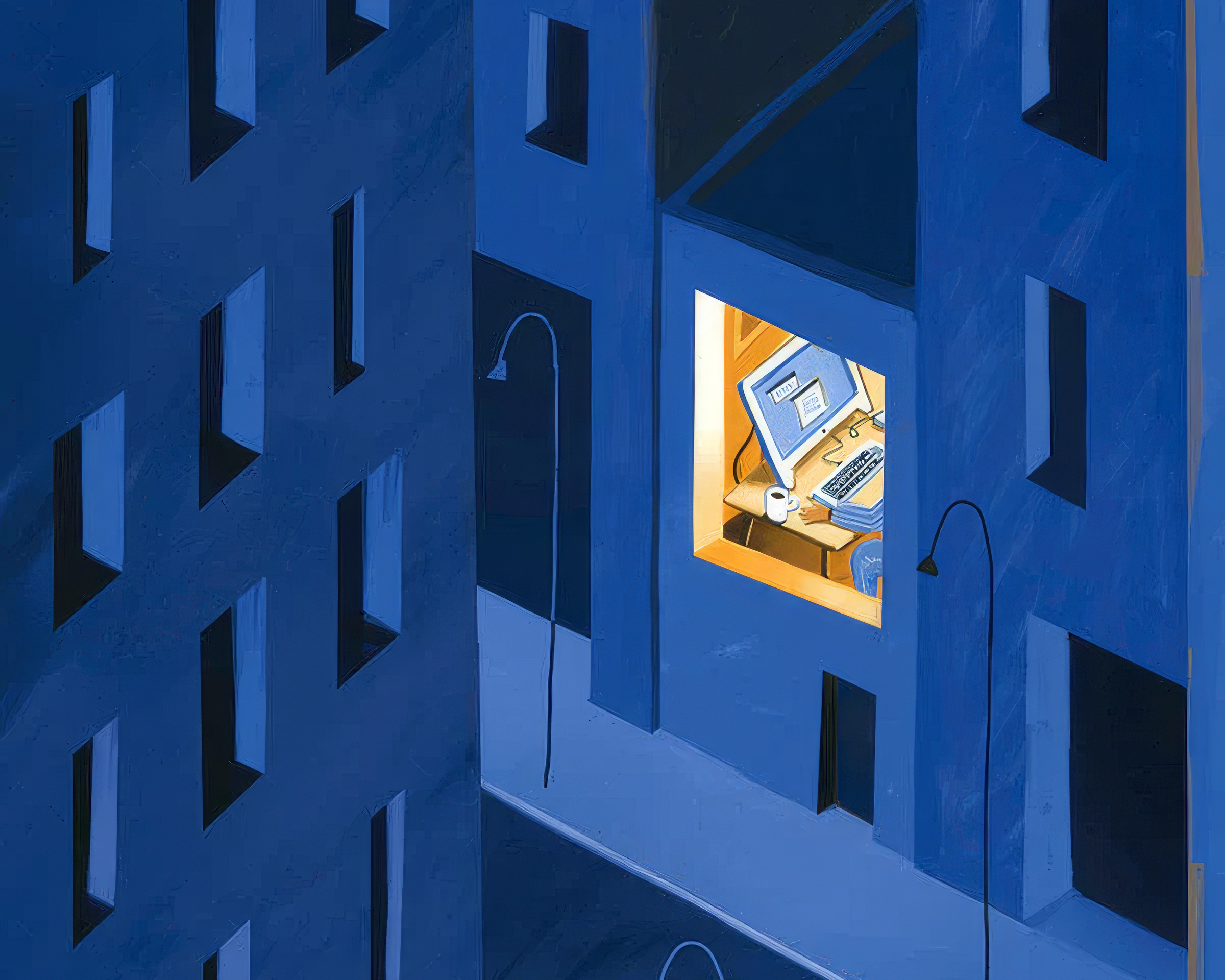
For several years after leaving my former design studio, I typed the same word everywhere. FREELANCER. It sounded honest. It described the fact. I work alone, no employment contract, no studio. Never mind that it did not describe reality.
I understood this quite late. Only a year or two ago, when someone from outside referred to me as a "freelancer" at a conference, around a competition, in the context of jury work. The word came back to me from the outside and only then did I see how poorly it fit. The problem was simple. I wrote it myself. So that is how people saw me.
Why you should be careful with this word.
In common understanding, a freelancer is someone you bring in as needed. Someone unattached. Someone who comes in, delivers and leaves. For many clients it signals: available, flexible, no strings attached.
I never worked that way.
I always engage in the process more than the situation requires. Not because I cannot set boundaries. Because I know there is no other way. A good product does not come from a brief and a delivery date. It comes from understanding the brand, the user, the context, the strategy. And to understand those things, you have to be on the inside, not the outside.
A freelancer waits to be told what to do. More often than not, I am the one telling others what to do next, and why.
The word "freelancer" positions you on the outside before the conversation even begins.
What 400 projects and 25 years across different industries give you.
When you spend a quarter of a century working on products across medicine, consumer electronics, aviation, industrial systems, interiors, brands and publishing, you start seeing patterns that are invisible from within a single industry. A standard solution in medical devices can be a breakthrough in consumer electronics. The logic behind building a product brand works equally well for a personal brand. The way you think about the user of a medical device changes how you look at the user of everything else.
I wrote about this in more depth in the context of my jury experience. The best products win not because they are the most beautiful. They win because someone took care of consistency across all levels at once. Form says the same thing as the brand. The brand says the same thing as the communication. The communication says the same thing as the user experience. Everything is one conversation, spoken in one coherent voice.
Where does the ability to build that consistency come from? From being there hundreds of times. From watching how a product wins or loses not because of its form, but because of a disconnect between what it promises and what it is. A quarter of a century and over four hundred projects across a dozen industries gives you a library of patterns and the ability to design holistically, to create visions and objects that come together as a coherent whole, because you understand every element of that whole from your own experience, not from theory.
A freelancer delivers one piece of the puzzle. The whole picture is seen by someone who has been at that puzzle enough times to know it by heart.
All Form One. What it means in practice.
All Form One is not a rebrand of a design studio. It is a manifesto in a name.
Drawn from Dumas and the Musketeers, "all for one, one for all," but transformed into something of my own. My Musketeers are creativity, vision and experience. Three forces that operate independently but only make sense together. None of them creates anything lasting without the others.
All Form One is also an umbrella over what Marika Jóźwiak and I are building together. The two of us are like Musketeers who act jointly and in one cause. We form our activities, our company, our brands and our projects together. Each of us has their own path and their own voice. But the direction is shared.
And there is one more layer in the name. "All Form" means all forms, the full spectrum of shaping things. Products, brands, ventures, narratives. "One" means one coherent whole. That is not coincidence. It is a precise description of what I have been doing for 25 years, before I finally found the right words for it.
A freelancer delivers work. That is honest and necessary. But it is not enough to describe someone who spent a quarter of a century learning to see the whole, not just the form, but the story, the meaning and the consequences of what they design.
All Form One builds things. The difference is simple. It just took me a little too long to say it out loud.
— Boni
Dlaczego przestałem nazywać siebie freelancerem.
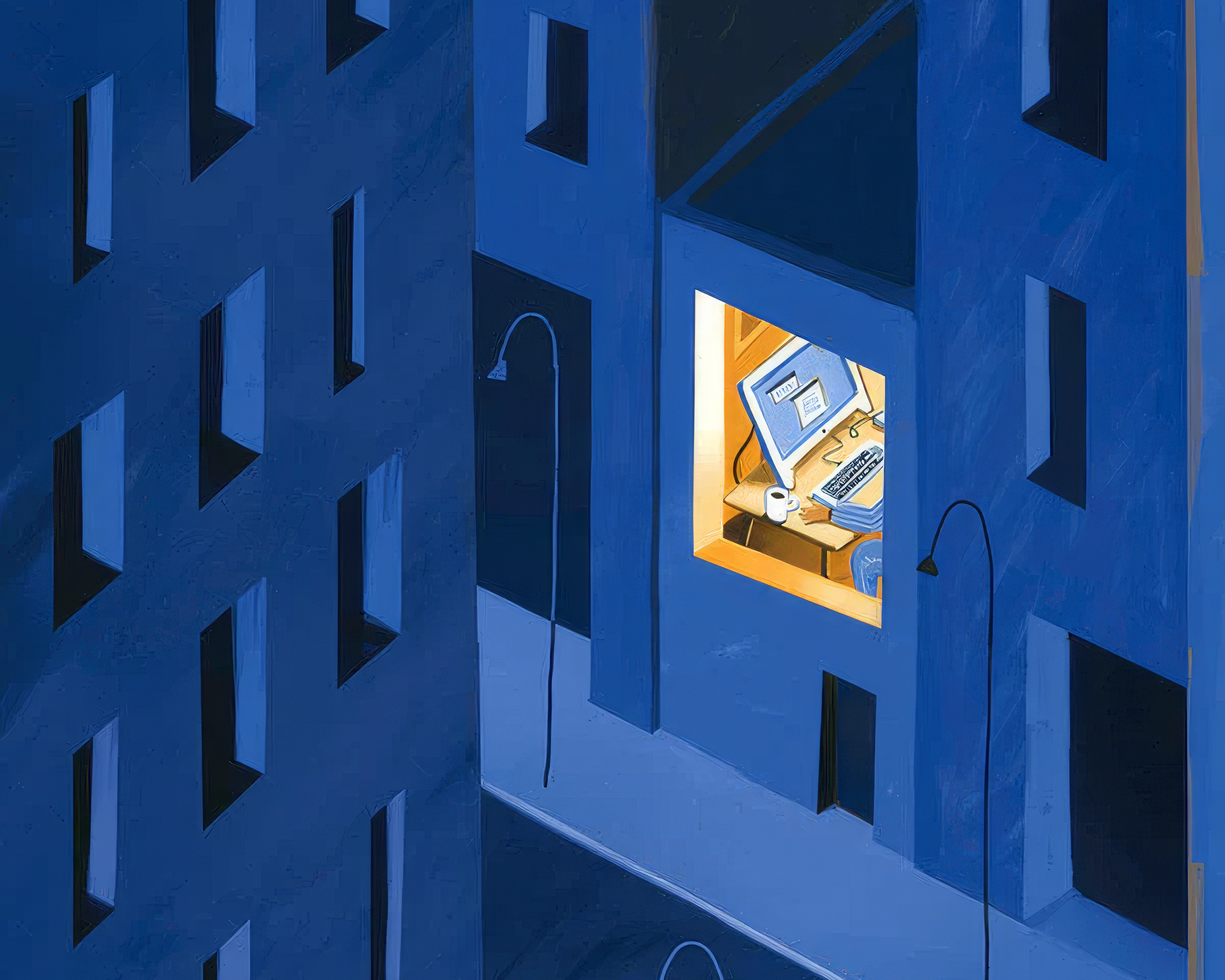
Przez kilka lat po odejściu z byłego biura projektowego wpisywałem wszędzie to samo słowo. Freelancer. Brzmiało uczciwie. Opisywało fakt. Pracuję sam, bez etatu, bez studia. Co z tego, że nie opisywało rzeczywistości.
Zrozumiałem to dość późno. Dopiero rok, może dwa lata temu, gdy ktoś z zewnątrz powiedział o mnie "freelancer" na konferencji, przy okazji konkursu, w kontekście jurorowania. Słowo wróciło do mnie z zewnątrz i dopiero wtedy zobaczyłem jak nie pasuje. Problem był prosty. Sam tak pisałem. Więc tak mnie postrzegano.
Dlaczego warto uważać na to słowo.
Freelancer w powszechnym rozumieniu to ktoś z doskoku. Ktoś nieprzywiązany. Ktoś, kto wchodzi, dostarcza i wychodzi. Dla wielu klientów to sygnał: dostępny, elastyczny, bez zobowiązań.
Ja nigdy tak nie pracowałem.
Zawsze angażuję się w proces bardziej niż sytuacja wymaga. Nie dlatego, że nie umiem stawiać granic. Dlatego że wiem, iż inaczej się nie da. Dobry produkt nie powstaje z briefu i daty dostarczenia. Powstaje z rozumienia marki, użytkownika, kontekstu, strategii. A żeby to rozumieć, musisz być w środku, nie na zewnątrz.
Freelancerowi trzeba powiedzieć co ma zrobić. Ja częściej jestem tym, który mówi innym co zrobić dalej i po co.
Słowo "freelancer" ustawia cię na zewnątrz, zanim jeszcze zaczniesz rozmawiać.
Co daje 400 projektów i 25 lat w różnych branżach.
Kiedy przez ćwierć wieku pracujesz przy produktach ze świata medycyny, elektroniki konsumenckiej, lotnictwa, systemów przemysłowych, wnętrz, marek i publikacji, zaczynasz widzieć wzorce, których nie widać z jednej branży. Rozwiązanie standardowe w medycynie bywa przełomem w elektronice. Logika budowania marki produktowej działa tak samo przy marce osobistej. Sposób myślenia o użytkowniku urządzenia medycznego zmienia to, jak patrzysz na użytkownika każdego innego produktu.
Pisałem o tym szerzej przy okazji doświadczeń jurorskich. Najlepsze produkty wygrywają nie dlatego, że są najładniejsze. Wygrywają dlatego, że ktoś zadbał o spójność na wszystkich poziomach jednocześnie. Forma mówi to samo co marka. Marka mówi to samo co komunikacja. Komunikacja mówi to samo co doświadczenie użytkownika. Wszystko jest jedną rozmową prowadzoną spójnym głosem.
Skąd pochodzi umiejętność budowania tej spójności? Z bycia przy tym setki razy. Z obserwowania jak produkt wygrywa albo przegrywa nie przez formę, ale przez brak spójności między tym co obiecuje a tym czym jest. Ćwierć wieku i ponad czterysta projektów w kilkunastu branżach daje ci bibliotekę wzorców i umiejętność holistycznego projektowania, tworzenia wizji i materii, które łączą się w spójną całość, bo rozumiesz każdy element tej całości z własnego doświadczenia, a nie z teorii.
Freelancer dostarcza jeden element tej układanki. Całość widzi ktoś, kto był przy tej układance wystarczająco wiele razy, żeby znać ją na pamięć.
All Form One. Co to znaczy w praktyce.
All Form One to nie jest rebrand studia projektowego. To jest manifest w nazwie.
Zaczerpnięty od Dumasa i muszkieterów, "all for one, one for all," ale przekuty w coś własnego. U mnie muszkieterami są kreatywność, wizja i doświadczenie. Trzy siły, które działają osobno, ale mają sens tylko razem. Żadna z nich bez pozostałych nie tworzy czegoś trwałego.
All Form One to też parasol nad tym, co budujemy razem z moją najcudowniejszą Mariką Jóźwiak. Ona i ja jesteśmy jak muszkieterowie, którzy działają wspólnie i w jednej sprawie. Formujemy razem nasze działania, firmę, marki, projekty. Każde z nas ma własną drogę i własny głos. Ale kierunek jest wspólny.
I jest w tej nazwie jeszcze jedna warstwa. "All Form" to wszystkie formy, pełne spektrum kształtowania. Produkty, marki, przedsięwzięcia, narracje. "One" to jedna spójna całość. To nie przypadek. To dokładny opis tego, co przez 25 lat robiłem, zanim w końcu znalazłem dla tego właściwe słowa.
Freelancer wykonuje zlecenia. To uczciwe i potrzebne. Ale to za mało, żeby opisać kogoś, kto przez ćwierć wieku uczył się widzieć całość, nie tylko formę, ale historię, sens i konsekwencje tego co projektuje.
All Form One buduje rzeczy. Różnica jest prosta. Zajęło mi trochę za dużo czasu, żeby powiedzieć to głośno.
— Boni
✍️ About the author: Michał "Boni" Bonikowski is an industrial designer, brand builder and entrepreneur based in Warsaw. CEO of All Form One, an independent creative enterprise. Over 25 years and 400+ products across medical devices, consumer electronics, aviation and industrial sectors. iF Gold Award 2014 — first Polish winner. Red Dot 2021. DesignEuropa Finalist 2021. Juror for iF Design Award, ADC Annual Awards, DesignEuropa EUIPO, Dobry Wzór and Taiwan International Student Design Competition. Member of the Advisory Board, Central European Creative Awards.